
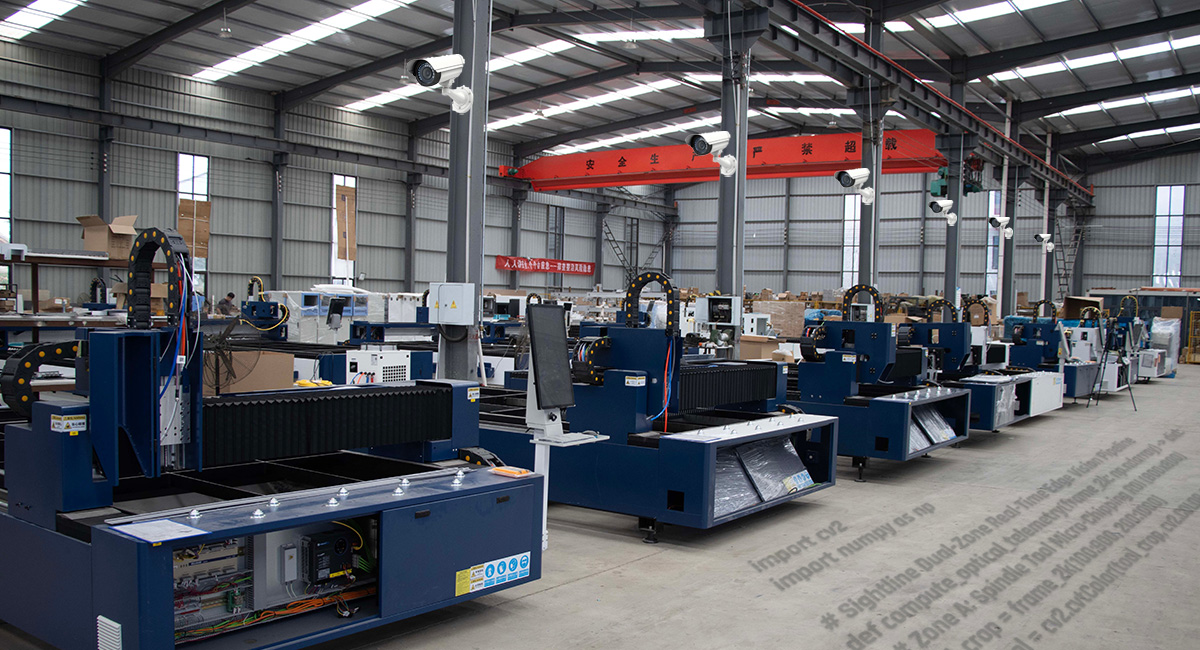
In high-volume precision CNC machining, machine operators are faced with an inescapable limitation: human optical fatigue. Inspecting a spinning cutting insert or evaluating microscopic exit burrs on machined aluminum every 3 minutes is physically impossible across an 8-hour shift. When an insert fractures mid-pass, it ruins the workpiece, burns the tool holder, and risks kinetic spindle collision damage exceeding $15,000.
The Core Engineering Paradigm: Traditional Automated Optical Inspection (AOI) demands intrusive PLC taps, specialized Modbus wiring, or cloud uploads. Sightline Edge AI eliminates this friction by operating as an external, zero-intrusion optical sentry—using high-resolution 2K frames to extract mathematical telemetry without touching machine logic.
1. The Geometry of Optical Sentry Placement
Unlike broad security surveillance cameras, optical watchdogs for CNC machine tools require calibrated angles of incidence. Optimal sentry positioning relies on three shop-floor variables:
- Tool Spindle Line-of-Sight (Zone A): The primary camera must be mounted rigid to the machine enclosure or support pillar at an elevation of 30° to 45°, angled directly toward tool retract positions.
- Feedbed Deliverable Inspection (Zone B): A secondary optical cone (or calibrated wide FOV) targeting the parts exit tray to inspect edge burrs and gross surface fractures.
- Coolant Mist & Vibration Mitigation: Industrial IP67 sealed camera enclosures equipped with air-curtain nozzles prevent atomized coolant oil droplets from occluding the optical front element.
2. Mathematical Optical Telemetry (No Cloud Required)
Sightline implements deterministic edge-vision algorithms written in native C-compiled machine code. By utilizing dual Region-of-Interest (ROI) cropping, the engine processes high-resolution 2K frames without overloading low-power industrial PCs:
3. Protecting Flash Storage & 72-Hour Shift Evaluation
Writing thousands of high-definition 2K frames directly to an industrial SSD will burn through drive write endurance within months. Sightline solves this through a **Zero-Copy Shared Memory Buffer (`/dev/shm`)**:
Frames stream into RAM first. Only baseline intervals and flagged defective parts are atomically committed to SSD (`os.replace`). Combined with reactive FIFO purging at 85% disk quota, flash memory endurance is guaranteed for 5+ years of continuous 24/7 factory operation.
4. Transitioning from Pilot to Plant Production
Machine shops evaluate Sightline out-of-the-box using the complimentary 72 Cumulative Active Operating Hours Trial. Because tracking relies on real machine runtime recorded deterministically in SQLite, plants can evaluate the watchdog across continuous shifts or intermittent batches before converting to a permanent single or multi-node perpetual license.
Ready to Evaluate Sightline on Your Production Line?
Download the certified zero-Docker standalone appliance for Windows or Linux.
Download Appliance Package →